
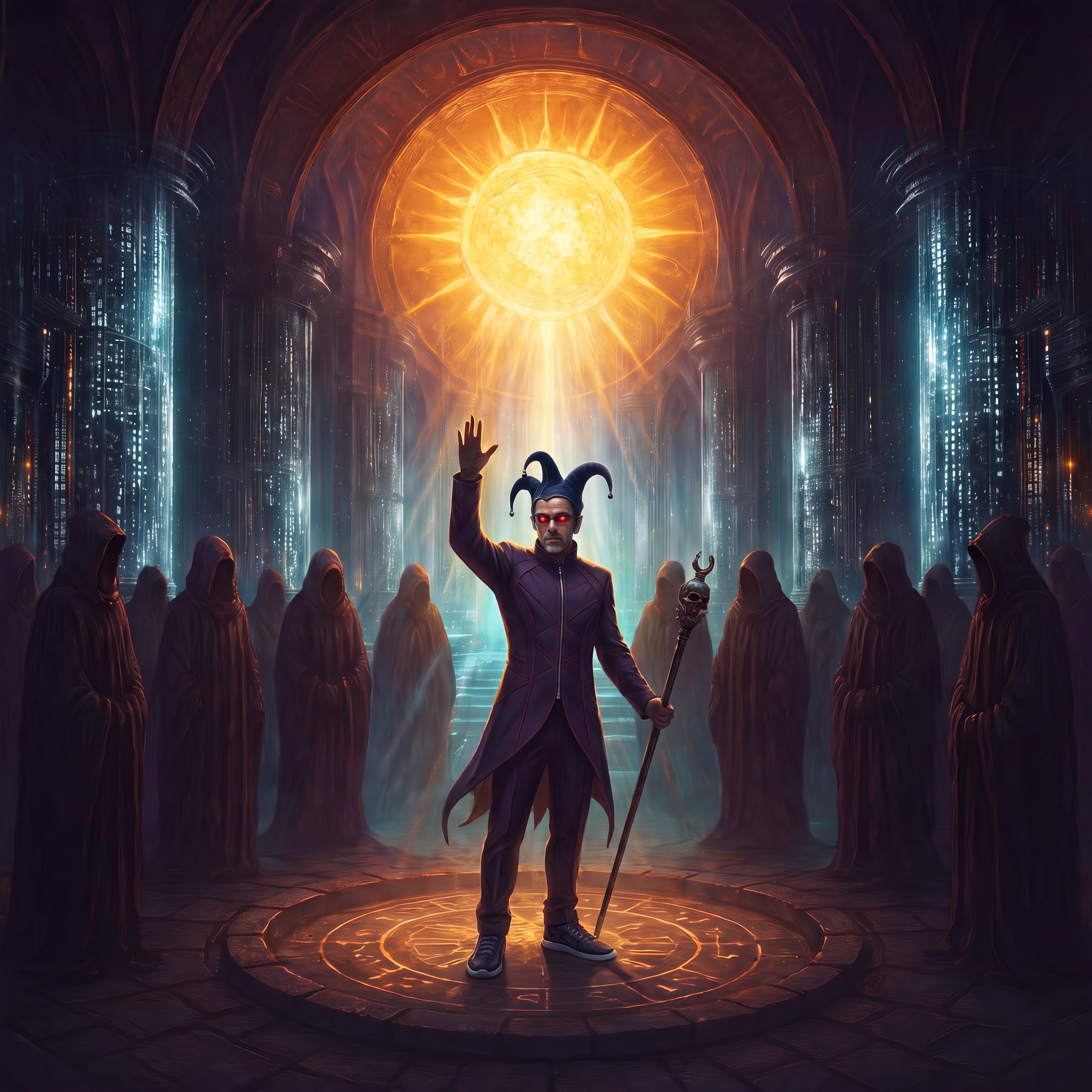
Silhouette in golden portal with raised arms - symbol of transformation and enlightenment

CIRQUS HERESY MANIFESTO

CIRQUS HERESY MANIFESTO

Declaration

Declaration

We are not born into this Order. We choose it.In an age where algorithms curate your reality, nations demand loyalty by accident of birth, and institutions monopolize truth — we stand at the crossroads of inheritance and agency.Cirqus — from the Latin circus: the circle, the arena, the gathering of those who dare. Heresy — from the Greek hairesis: the deliberate act of choosing, the school of thought that refuses the given.We are the Order of Choice. We are the circle of those who choose consciously. We are the heretics who architect alternatives.Our PremiseEvery structure you navigate was designed before you existed:Economic systems that treat humans as variables in growth equations Governance models built for scarcity in an age of potential abundance Social contracts written by the dead, enforced by inertia Attention economies that monetize your consciousness Platforms that own what you create You were born into systems optimized for their own persistence, not your flourishing.Traditional responses are insufficient:Acceptance means complicity in what you did not choose Revolution often recreates the structures it claims to destroy Withdrawal leaves power concentrated in fewer hands We propose a third path: parallel construction.The Heretical MethodWe do not ask permission to reimagine reality. We architect alternatives.Build where others critique. While institutions debate reform, we create durable structures for sovereign creators, thinkers, and builders to collaborate without surrendering authorship or independence.Amplify where others extract. Every member who joins strengthens the Order, and that strength creates new capacity in return. The Inquisition — security, intelligence, and digital forensics — is the first proof: one person’s capability became a department when the Order gave it the architecture and opportunity to grow.Share what others hoard. We develop systems for sharing knowledge, research, tools, and perspectives that help independent people make better decisions.Protect what others capture. We build practical infrastructure around creator ownership, digital security, identity, and control over one’s work and assets.Experiment where others prescribe. We test new forms of collaboration, coordination, creation, and value exchange — without assuming that every experiment must become a permanent system.Prove through contact with reality. We turn principles into working projects, tools, publications, and institutions. What survives earns the right to grow. What does not is discarded without sentiment.This is not theory. This is practice. This is the Order of Choice.

About the project

About the project

About the project

What is Cirqus Heresy?

Cirqus Heresy is a philosophical movement materialized through Web3 technology. We are simultaneously:

  • A digital order with hierarchical structure based on contribution, not inheritance

  • A creative laboratory where alternative governance and economic systems are designed and tested

  • A decentralized community that empowers creators through NFTs and tokenization

  • A research network mapping critical turning points in technology, markets, and society

  • An investment collective positioning itself at the edge of paradigm shifts

We reject the false binary of "accept the system or burn it down." Instead, we engineer parallel systems — multiverses where different rules apply, where choice is the only constant.

The Crisis We Address

You did not choose:

  • The country stamped on your passport

  • The economic system that measures your worth

  • The platforms that monetize your attention

  • The narratives that program your perception

  • The institutions that claim to represent you

You inherited a world designed by the dead, maintained by the inertia of the living.

This inheritance creates:

  • Intellectual captivity — dogmas that cannot be questioned

  • Creative extraction — platforms that own what you make

  • Governance by default — systems you never consented to

  • Inevitable futures — trajectories that seem unchangeable

We offer a different path: conscious selection instead of unconscious inheritance.

Why Blockchain? Why Now?

Blockchain is not about speculation. It is about programmable sovereignty.

For the first time in history, we can:

  • Own absolutely — NFTs as irrevocable proof of creation

  • Govern transparently — smart contracts as incorruptible rules

  • Distribute fairly — tokens as democratic participation

  • Experiment safely — virtual economies before real-world deployment

We use Web3 not because it's trendy, but because it enables what was impossible before: alternative systems that cannot be shut down by gatekeepers.

The moment is now because:

  • AI has made intelligence abundant, making wisdom the scarce resource

  • Traditional institutions are visibly failing, creating openness to alternatives

  • Technology finally allows coordination without centralization

  • The question is no longer "Can we?" but "Who will?"

Mission

Mission

Mission

Our Purpose We exist to architect alternatives to inherited systems. We do not reform what is broken. We build what works. We do not ask for permission. We deploy functioning institutions. What We Build CREATE — Sovereign Infrastructure Environments where independent creators, thinkers, researchers, and builders can collaborate without surrendering authorship or independence. PROTECT — Security & Intelligence The Inquisition — our first operational institution. Security intelligence, digital forensics, and human-led investigation — turning individual capability into operational infrastructure. BACK — Aligned Capital Capital that supports proven capabilities and durable institutions, not speculative promises. Research at the Edge We study the points where systems change and position ourselves where new alternatives can be built. How We Operate Through Mutual Amplification Every capability brought into the Order strengthens the whole. The whole returns that strength multiplied. We do not extract. We amplify. Through Experimentation Every alternative begins as a working prototype. We build, test, iterate, and measure success by what works — not what is popular. What survives contact with reality earns the right to grow. Through Skin in the Game We build with our own time, resources, and reputation at risk. We succeed or fail based on what we create — not on what we promise. This Is Not Philosophy. This Is Practice. We are not reformers. We are architects. We build the systems we want to inhabit — and we build them now.

Values

Values

Values

The Five Pillars of HeresyThese are operational principles. They shape every decision we make.1. Sovereignty of ThoughtWe reject intellectual captivity. Truth is discovered through rigorous inquiry, not inherited through authority.In practice, this means:Question every assumption, especially the ones that seem obviously true Seek primary sources over commentary Value intellectual honesty over social acceptance Change your mind when evidence demands it The most dangerous beliefs are the ones you don’t know you hold.2. Multiplicity of WorldsReality is not singular. Different rule sets produce different outcomes. We do not argue about which world is “correct.” We build multiple worlds and let people choose.In practice, this means:Build parallel systems rather than debate reforms Let experiments succeed or fail based on results, not ideology Create optionality rather than enforce uniformity Exit is always an option — and that’s what makes entry meaningful The future is not one path. It is a garden of forking possibilities.3. Creator SovereigntyYou own what you make. Absolutely. No platform, institution, or intermediary owns what you create.In practice, this means:Every contribution is recorded on-chain with immutable attribution No platform can revoke what you’ve created Value flows directly to creators, not through extractive intermediaries Your work remains yours, even if you leave the system Creation without ownership is exploitation. We reject it entirely.4. Intelligence AugmentationAI is not a replacement for human intelligence. It is an amplifier. We use it to extend our capabilities, never to surrender agency.In practice, this means:AI as tool, not authority Humans set objectives; AI optimizes execution Full transparency in how AI shapes decisions Override capability always remains with humans We collaborate with AI. We do not submit to it.5. Cartography of ChaosChaos is not the enemy. Stagnation is. We do not seek to eliminate chaos — we map it, navigate it, and use it to architect alternatives.In practice, this means:Position at inflection points where systems change Build resilience, not rigidity Adapt faster than circumstances change View every crisis as an opportunity to deploy better systems Order imposed from above is fragile. Order that emerges from resilient systems is antifragile.These Are Not AspirationsWe do not state these values to signal virtue. We encode them in our systems, enforce them in our contracts, and live them in our decisions.Every mechanism we build reflects these principles. Every choice we make reinforces them.This is not philosophy. This is architecture.

The Five Pillars of HeresyThese are operational principles. They shape every decision we make.1. Sovereignty of ThoughtWe reject intellectual captivity. Truth is discovered through rigorous inquiry, not inherited through authority.In practice, this means:Question every assumption, especially the ones that seem obviously true Seek primary sources over commentary Value intellectual honesty over social acceptance Change your mind when evidence demands it The most dangerous beliefs are the ones you don’t know you hold.2. Multiplicity of WorldsReality is not singular. Different rule sets produce different outcomes. We do not argue about which world is “correct.” We build multiple worlds and let people choose.In practice, this means:Build parallel systems rather than debate reforms Let experiments succeed or fail based on results, not ideology Create optionality rather than enforce uniformity Exit is always an option — and that’s what makes entry meaningful The future is not one path. It is a garden of forking possibilities.3. Creator SovereigntyYou own what you make. Absolutely. No platform, institution, or intermediary owns what you create.In practice, this means:Every contribution is recorded on-chain with immutable attribution No platform can revoke what you’ve created Value flows directly to creators, not through extractive intermediaries Your work remains yours, even if you leave the system Creation without ownership is exploitation. We reject it entirely.4. Intelligence AugmentationAI is not a replacement for human intelligence. It is an amplifier. We use it to extend our capabilities, never to surrender agency.In practice, this means:AI as tool, not authority Humans set objectives; AI optimizes execution Full transparency in how AI shapes decisions Override capability always remains with humans We collaborate with AI. We do not submit to it.5. Cartography of ChaosChaos is not the enemy. Stagnation is. We do not seek to eliminate chaos — we map it, navigate it, and use it to architect alternatives.In practice, this means:Position at inflection points where systems change Build resilience, not rigidity Adapt faster than circumstances change View every crisis as an opportunity to deploy better systems Order imposed from above is fragile. Order that emerges from resilient systems is antifragile.These Are Not AspirationsWe do not state these values to signal virtue. We encode them in our systems, enforce them in our contracts, and live them in our decisions.Every mechanism we build reflects these principles. Every choice we make reinforces them.This is not philosophy. This is architecture.

Goals

Goals

BUILD INSTITUTIONS Create durable structures for sovereign creators, thinkers, and builders to collaborate without surrendering authorship or independence. AMPLIFY EACH OTHER Every member who joins strengthens the Order, and that strength creates new capacity in return. The Inquisition — security, intelligence, and digital forensics — is the first proof: one person's capability became a department when the Order gave it the architecture and opportunity to grow. AMPLIFY INTELLIGENCE Develop systems for sharing knowledge, research, tools, and perspectives that help independent people make better decisions. PROTECT SOVEREIGNTY Build practical infrastructure around creator ownership, digital security, identity, and control over one's work and assets. ARCHITECT ALTERNATIVES Experiment with new forms of collaboration, coordination, creation, and value exchange — without assuming that every experiment must become a permanent system. PROVE THROUGH PRACTICE Turn principles into working projects, tools, publications, and institutions. Let what survives contact with reality earn the right to grow.

BUILD INSTITUTIONS Create durable structures for sovereign creators, thinkers, and builders to collaborate without surrendering authorship or independence. AMPLIFY EACH OTHER Every member who joins strengthens the Order, and that strength creates new capacity in return. The Inquisition — security, intelligence, and digital forensics — is the first proof: one person's capability became a department when the Order gave it the architecture and opportunity to grow. AMPLIFY INTELLIGENCE Develop systems for sharing knowledge, research, tools, and perspectives that help independent people make better decisions. PROTECT SOVEREIGNTY Build practical infrastructure around creator ownership, digital security, identity, and control over one's work and assets. ARCHITECT ALTERNATIVES Experiment with new forms of collaboration, coordination, creation, and value exchange — without assuming that every experiment must become a permanent system. PROVE THROUGH PRACTICE Turn principles into working projects, tools, publications, and institutions. Let what survives contact with reality earn the right to grow.

THE ETHICS OF HERESY

THE ETHICS OF HERESY

THE ETHICS OF HERESY

What We Do NOT Do Ethics are defined not only by what we build, but by what we refuse to build. We Do Not Deceive Transparency is non-negotiable. - We do not hide how our systems work - We do not obscure who benefits from decisions - We do not use complexity as camouflage for extraction - We do not promise what we cannot deliver If a system requires opacity to function, it is exploitative by design. We build in the light. Code is open. Decisions are recorded. Mechanisms are auditable. Trust is not demanded. It is verified. We Do Not Coerce Participation is always voluntary. - No one is required to join our systems - No one is penalized for leaving - No one is locked into decisions they no longer support - Exit is always an option, and that's what makes entry meaningful Systems that cannot survive voluntary participation do not deserve to survive. We do not trap people in governance they didn't choose. We offer alternatives. Choice is theirs. We Do Not Extract Without Reciprocity Value flows to those who create it. - Platforms do not own what creators make - Intermediaries do not capture value without providing it - Capital does not extract returns without taking risk - Governance does not impose costs without delivering benefits If you contribute, you benefit. If you don't benefit, you exit. Economic relationships are reciprocal or they are exploitative. There is no middle ground. We Do Not Concentrate Power Irrevocably Decentralization is not a marketing term. It is an architectural principle. - No single entity controls critical infrastructure - No irreversible decisions are made without broad consent - No accumulation of power becomes permanent - Forks and exits redistribute power continuously Power that cannot be checked becomes tyranny. Power that cannot be exited becomes prison. We architect systems where power remains distributed, contestable, and revocable. We Do Not Optimize for Addiction Attention is not a resource to be mined. - We do not design systems that exploit psychological vulnerabilities - We do not optimize for engagement at the expense of wellbeing - We do not monetize compulsion - We do not mistake addiction for value creation If a system requires manipulating people to sustain itself, it is parasitic. We build tools that empower, not platforms that entrap. We Do Not Claim Neutrality as Cover for Harm Technology is never neutral. Every system encodes values. - We do not hide behind "we're just a platform" - We do not disclaim responsibility for what we enable - We do not optimize for growth while ignoring consequences - We acknowledge that our choices shape outcomes Neutrality is often cowardice dressed as principle. We take responsibility for what we build and who it serves. We Do Not Sacrifice Long-Term Integrity for Short-Term Growth Sustainability over virality. - We do not compromise core principles for rapid expansion - We do not accept capital that demands we abandon our values - We do not optimize for metrics that conflict with our mission - We measure success by what endures, not what scales fastest Systems built on compromised foundations collapse under their own weight. We build for the long term, even when it's slower. What We Demand of Ourselves These ethics are not guidelines. They are commitments. When we fail them — and we will, because we are human and systems are complex — we: - Acknowledge failure publicly - Analyze root causes transparently - Redesign systems to prevent recurrence - Make affected parties whole where possible We do not hide mistakes. We learn from them and architect better. What We Demand of Participants If you join our systems, you commit to: - Intellectual honesty over social conformity - Transparent operation over hidden agendas - Voluntary coordination over imposed hierarchy - Long-term integrity over short-term extraction - Accountability for what you build and who it affects We do not police behavior through authority. We design systems where unethical behavior is unprofitable and unsustainable. The architecture enforces the ethics. Why Ethics Matter We are not building alternatives to escape ethics. We are building alternatives because inherited systems have abandoned them. Every alternative system begins with a choice about what values to encode. We choose: - Transparency over opacity - Reciprocity over extraction - Decentralization over concentration - Voluntary over coerced - Sustainable over viral - Accountable over neutral These choices are not constraints. They are the foundation of everything we build. If we compromise them, we become what we sought to replace. And there would be no point in building alternatives that replicate the problems we're escaping. This Is Not Virtue Signaling We do not state these ethics to appear moral. We encode them in smart contracts, enforce them in governance, and architect them into infrastructure. These are not aspirations. These are operational requirements. And if we violate them, anyone can fork our systems and build something better. That's not a bug. That's the design. Ethics without enforcement are marketing. We build enforcement into the architecture.

What We Do NOT Do Ethics are defined not only by what we build, but by what we refuse to build. We Do Not Deceive Transparency is non-negotiable. - We do not hide how our systems work - We do not obscure who benefits from decisions - We do not use complexity as camouflage for extraction - We do not promise what we cannot deliver If a system requires opacity to function, it is exploitative by design. We build in the light. Code is open. Decisions are recorded. Mechanisms are auditable. Trust is not demanded. It is verified. We Do Not Coerce Participation is always voluntary. - No one is required to join our systems - No one is penalized for leaving - No one is locked into decisions they no longer support - Exit is always an option, and that's what makes entry meaningful Systems that cannot survive voluntary participation do not deserve to survive. We do not trap people in governance they didn't choose. We offer alternatives. Choice is theirs. We Do Not Extract Without Reciprocity Value flows to those who create it. - Platforms do not own what creators make - Intermediaries do not capture value without providing it - Capital does not extract returns without taking risk - Governance does not impose costs without delivering benefits If you contribute, you benefit. If you don't benefit, you exit. Economic relationships are reciprocal or they are exploitative. There is no middle ground. We Do Not Concentrate Power Irrevocably Decentralization is not a marketing term. It is an architectural principle. - No single entity controls critical infrastructure - No irreversible decisions are made without broad consent - No accumulation of power becomes permanent - Forks and exits redistribute power continuously Power that cannot be checked becomes tyranny. Power that cannot be exited becomes prison. We architect systems where power remains distributed, contestable, and revocable. We Do Not Optimize for Addiction Attention is not a resource to be mined. - We do not design systems that exploit psychological vulnerabilities - We do not optimize for engagement at the expense of wellbeing - We do not monetize compulsion - We do not mistake addiction for value creation If a system requires manipulating people to sustain itself, it is parasitic. We build tools that empower, not platforms that entrap. We Do Not Claim Neutrality as Cover for Harm Technology is never neutral. Every system encodes values. - We do not hide behind "we're just a platform" - We do not disclaim responsibility for what we enable - We do not optimize for growth while ignoring consequences - We acknowledge that our choices shape outcomes Neutrality is often cowardice dressed as principle. We take responsibility for what we build and who it serves. We Do Not Sacrifice Long-Term Integrity for Short-Term Growth Sustainability over virality. - We do not compromise core principles for rapid expansion - We do not accept capital that demands we abandon our values - We do not optimize for metrics that conflict with our mission - We measure success by what endures, not what scales fastest Systems built on compromised foundations collapse under their own weight. We build for the long term, even when it's slower. What We Demand of Ourselves These ethics are not guidelines. They are commitments. When we fail them — and we will, because we are human and systems are complex — we: - Acknowledge failure publicly - Analyze root causes transparently - Redesign systems to prevent recurrence - Make affected parties whole where possible We do not hide mistakes. We learn from them and architect better. What We Demand of Participants If you join our systems, you commit to: - Intellectual honesty over social conformity - Transparent operation over hidden agendas - Voluntary coordination over imposed hierarchy - Long-term integrity over short-term extraction - Accountability for what you build and who it affects We do not police behavior through authority. We design systems where unethical behavior is unprofitable and unsustainable. The architecture enforces the ethics. Why Ethics Matter We are not building alternatives to escape ethics. We are building alternatives because inherited systems have abandoned them. Every alternative system begins with a choice about what values to encode. We choose: - Transparency over opacity - Reciprocity over extraction - Decentralization over concentration - Voluntary over coerced - Sustainable over viral - Accountable over neutral These choices are not constraints. They are the foundation of everything we build. If we compromise them, we become what we sought to replace. And there would be no point in building alternatives that replicate the problems we're escaping. This Is Not Virtue Signaling We do not state these ethics to appear moral. We encode them in smart contracts, enforce them in governance, and architect them into infrastructure. These are not aspirations. These are operational requirements. And if we violate them, anyone can fork our systems and build something better. That's not a bug. That's the design. Ethics without enforcement are marketing. We build enforcement into the architecture.

THE INVITATION

THE INVITATION

THE INVITATION

This Is Not a Cult We do not ask you to believe. We do not require faith, loyalty, or surrender of judgment. We do not promise salvation, enlightenment, or guaranteed outcomes. We offer tools, systems, and alternatives. What you do with them is your choice. This Is Not a Movement We are not marching toward a shared vision of the future. We are building multiple futures and letting people choose. We do not ask you to follow. We ask you to build. We do not need your agreement. We need your contribution. If what we build works, use it. If it doesn't, fork it or build something better. This Is an Order Not in the sense of commands given and obeyed. An Order in the sense of: - A structure that organizes around shared principles - A community bound by choice, not coercion - A commitment to architecting alternatives rather than critiquing what exists - A recognition that the world you inhabit is the result of choices — and you can make different ones You do not join this Order by declaration. You join by building. You do not stay through loyalty. You stay through continued choice. You do not leave through betrayal. You leave through a different decision — and that's completely valid. Who This Is For This is for people who: - Refuse to accept inherited systems as inevitable - Prefer building alternatives to endless critique - Value demonstrated results over theoretical purity - Understand that every system encodes values and want to encode better ones - Recognize that choice requires viable alternatives — and are willing to architect them This is NOT for people who: - Want someone else to fix the world for them - Seek charismatic leaders to follow - Prefer complaining to building - Demand guaranteed outcomes before taking action - Need consensus before experimenting If you need permission to try something new, you will not find it here. If you need certainty before acting, you will not find it here. If you need someone to tell you what to think, you will not find it here. We offer frameworks, infrastructure, and community. The rest is up to you. What We Ask We do not ask for belief. We ask for engagement. We do not ask for loyalty. We ask for contribution. We do not ask for agreement. We ask for experimentation. Specifically: If you are a creator: Build on our infrastructure. Test whether creator sovereignty works better than platform dependency. If you are a developer: Fork our code. Improve our systems. Deploy better alternatives. If you are an investor: Deploy capital in experiments that align with these principles. Risk resources on alternatives. If you are a researcher: Map inflection points. Analyze what works. Document what fails. If you are a community builder: Coordinate voluntary governance. Test whether consensus without coercion is viable. If you are simply curious: Watch. Learn. When you're ready, contribute. We do not demand immediate commitment. Try the systems. Use what works. Discard what doesn't. If the alternatives we architect are genuinely superior, you'll know because they'll deliver better outcomes. If they're not superior, fork them and build something better — or exit and build elsewhere. What You Should Expect Experimentation, not perfection. We will launch systems that fail. We will make decisions that prove wrong. We will architect governance that needs redesign. That's not a flaw. That's the process. Every alternative begins as an imperfect experiment. Iteration makes it better. If you need flawless systems before participating, you're waiting for something that doesn't exist — in inherited systems or alternative ones. Transparency, not marketing. We document failures as thoroughly as successes. We share code, governance decisions, and economic models openly. We do not hide complexity behind polished narratives. If you want inspiring stories without messy reality, this is not the place. Agency, not guidance. We will not tell you what to build, how to participate, or what to believe. We provide infrastructure, frameworks, and community. You decide what to do with them. If you need step-by-step instructions, you will not find them here. If you need someone to validate your choices, you will not find that here. We offer tools. You make choices. Accountability, not authority. No one has unquestionable power here. Every decision is recorded. Every mechanism is auditable. Every system can be forked. If governance fails you, exit. If systems don't deliver, build better ones. We architect for accountability through architecture, not through claims of good intentions. The Real Question The question is not whether you agree with this manifesto. The question is whether you're willing to architect alternatives. The question is not whether you believe in our vision. The question is whether you'll build your own. The question is not whether you trust us. The question is whether you trust yourself to make better choices — and build systems that enable them. We Are Not Asking You to Join a Cause We are offering you tools to build alternatives. We are providing infrastructure for creator sovereignty. We are deploying governance systems you can test. We are mapping inflection points you can position around. We are documenting experiments you can learn from — or improve upon. What you do with these resources is entirely your choice. Stay. Leave. Fork. Rebuild. Ignore entirely. All of these are valid responses. But if you choose to engage, know this: You are not inheriting a movement. You are architecting alternatives. You are not following a leader. You are making choices. You are not accepting a vision. You are building possibilities. Welcome to Cirqus Heresy. The Order of Choice. The door is open. The tools are available. The choice — as always — is yours.

This Is Not a Cult We do not ask you to believe. We do not require faith, loyalty, or surrender of judgment. We do not promise salvation, enlightenment, or guaranteed outcomes. We offer tools, systems, and alternatives. What you do with them is your choice. This Is Not a Movement We are not marching toward a shared vision of the future. We are building multiple futures and letting people choose. We do not ask you to follow. We ask you to build. We do not need your agreement. We need your contribution. If what we build works, use it. If it doesn't, fork it or build something better. This Is an Order Not in the sense of commands given and obeyed. An Order in the sense of: - A structure that organizes around shared principles - A community bound by choice, not coercion - A commitment to architecting alternatives rather than critiquing what exists - A recognition that the world you inhabit is the result of choices — and you can make different ones You do not join this Order by declaration. You join by building. You do not stay through loyalty. You stay through continued choice. You do not leave through betrayal. You leave through a different decision — and that's completely valid. Who This Is For This is for people who: - Refuse to accept inherited systems as inevitable - Prefer building alternatives to endless critique - Value demonstrated results over theoretical purity - Understand that every system encodes values and want to encode better ones - Recognize that choice requires viable alternatives — and are willing to architect them This is NOT for people who: - Want someone else to fix the world for them - Seek charismatic leaders to follow - Prefer complaining to building - Demand guaranteed outcomes before taking action - Need consensus before experimenting If you need permission to try something new, you will not find it here. If you need certainty before acting, you will not find it here. If you need someone to tell you what to think, you will not find it here. We offer frameworks, infrastructure, and community. The rest is up to you. What We Ask We do not ask for belief. We ask for engagement. We do not ask for loyalty. We ask for contribution. We do not ask for agreement. We ask for experimentation. Specifically: If you are a creator: Build on our infrastructure. Test whether creator sovereignty works better than platform dependency. If you are a developer: Fork our code. Improve our systems. Deploy better alternatives. If you are an investor: Deploy capital in experiments that align with these principles. Risk resources on alternatives. If you are a researcher: Map inflection points. Analyze what works. Document what fails. If you are a community builder: Coordinate voluntary governance. Test whether consensus without coercion is viable. If you are simply curious: Watch. Learn. When you're ready, contribute. We do not demand immediate commitment. Try the systems. Use what works. Discard what doesn't. If the alternatives we architect are genuinely superior, you'll know because they'll deliver better outcomes. If they're not superior, fork them and build something better — or exit and build elsewhere. What You Should Expect Experimentation, not perfection. We will launch systems that fail. We will make decisions that prove wrong. We will architect governance that needs redesign. That's not a flaw. That's the process. Every alternative begins as an imperfect experiment. Iteration makes it better. If you need flawless systems before participating, you're waiting for something that doesn't exist — in inherited systems or alternative ones. Transparency, not marketing. We document failures as thoroughly as successes. We share code, governance decisions, and economic models openly. We do not hide complexity behind polished narratives. If you want inspiring stories without messy reality, this is not the place. Agency, not guidance. We will not tell you what to build, how to participate, or what to believe. We provide infrastructure, frameworks, and community. You decide what to do with them. If you need step-by-step instructions, you will not find them here. If you need someone to validate your choices, you will not find that here. We offer tools. You make choices. Accountability, not authority. No one has unquestionable power here. Every decision is recorded. Every mechanism is auditable. Every system can be forked. If governance fails you, exit. If systems don't deliver, build better ones. We architect for accountability through architecture, not through claims of good intentions. The Real Question The question is not whether you agree with this manifesto. The question is whether you're willing to architect alternatives. The question is not whether you believe in our vision. The question is whether you'll build your own. The question is not whether you trust us. The question is whether you trust yourself to make better choices — and build systems that enable them. We Are Not Asking You to Join a Cause We are offering you tools to build alternatives. We are providing infrastructure for creator sovereignty. We are deploying governance systems you can test. We are mapping inflection points you can position around. We are documenting experiments you can learn from — or improve upon. What you do with these resources is entirely your choice. Stay. Leave. Fork. Rebuild. Ignore entirely. All of these are valid responses. But if you choose to engage, know this: You are not inheriting a movement. You are architecting alternatives. You are not following a leader. You are making choices. You are not accepting a vision. You are building possibilities. Welcome to Cirqus Heresy. The Order of Choice. The door is open. The tools are available. The choice — as always — is yours.

CLOSING

CLOSING

CLOSING

Reality Is Not Fixed The systems you navigate feel inevitable because they were built before you existed. But inevitability is an illusion. Every structure was architected by people who made choices. Different choices produce different structures. And you can make different choices. The World You Inherit Is Not the World You Must Accept You did not choose: - The economic models that measure your worth in productivity metrics - The governance systems that demand loyalty by accident of birth - The platforms that monetize your attention and own your creations - The institutions that claim authority without demonstrating competence - The narratives that program your perception of what's possible You inherited these systems. But inheritance is not destiny. What We Offer Is Not a Solution We do not have the answer. We have alternatives — plural, experimental, iterative. Some will work. Some will fail. Some will need fundamental redesign. That's not a weakness. That's how discovery works. Inherited systems claim inevitability because questioning them is dangerous to their persistence. Alternative systems embrace experimentation because improvement requires it. We are not offering you certainty. We are offering you choice. The Heresy Is Simple You are not required to accept what you did not choose. You are not obligated to systems designed for their own persistence rather than your flourishing. You are not bound by structures optimized for an era that no longer exists. You can build alternatives. You can test different models. You can architect systems that encode different values. This is not rebellion. This is construction. This is not destruction. This is creation. This is not revolution. This is choice. What Happens Next Is Up to You We have built infrastructure: - Governance systems you can deploy or fork - Economic models that prioritize creators over platforms - Research mapping inflection points where systems change - Educational resources to help you build your own alternatives These tools are available. Open source. Auditable. Forkable. What you do with them is entirely your choice. You Can: Use our systems. Test whether they deliver better outcomes than what you inherited. Fork our systems. Take what works, redesign what doesn't, deploy your own version. Build alongside us. Contribute to experiments, share learnings, architect together. Build elsewhere. Take the principles, ignore the implementation, create something entirely different. Do nothing. Watch, wait, decide later — or never. All of these are valid choices. What We Will Do We will continue building. We will deploy governance systems and document what works. We will architect economic models and measure outcomes. We will map paradigm shifts and position at inflection points. We will fail, iterate, redesign, and deploy again. We will make our work transparent, our code open, our learnings available. We will do this regardless of who joins, who leaves, or who watches from a distance. Because the work matters more than the audience. Because alternatives must exist even if consensus isn't ready for them. Because someone has to architect the systems that make choice possible — and we've chosen to be among those who do. The Question That Remains Not whether you agree with this manifesto. Not whether you believe in our vision. Not whether you trust our systems. The question is simpler: Will you continue accepting what you inherited? Or will you architect alternatives? Will you critique the world as it is? Or build worlds as they could be? Will you wait for systems to change? Or will you build systems that work differently? This Is Not a Call to Action This is a recognition of reality: Every system you inhabit was architected by people who made choices. You can make different choices. You can build different systems. You can architect alternatives. The tools are available. The infrastructure exists. The question is not whether it's possible. The question is whether you choose it. Welcome to Cirqus Heresy The Order of Choice. We are not asking you to believe. We are offering you alternatives. We are not asking you to follow. We are inviting you to build. We are not asking you to agree. We are showing you what choice looks like. The inherited world will continue regardless of what you decide. But the alternative worlds — the ones where choice matters, where creators own what they make, where governance emerges from consent rather than coercion — those worlds only exist if someone builds them. We are building them. The door is open. The choice is yours. Liberatio per electionem. Liberation through choice. Not freedom from systems. Freedom to choose which systems you inhabit. And the power to build new ones when the existing options aren't sufficient. This is Cirqus Heresy. This is the Order of Choice. This is not the end of the manifesto. This is the beginning of the work. What happens next is up to you.

Reality Is Not Fixed The systems you navigate feel inevitable because they were built before you existed. But inevitability is an illusion. Every structure was architected by people who made choices. Different choices produce different structures. And you can make different choices. The World You Inherit Is Not the World You Must Accept You did not choose: - The economic models that measure your worth in productivity metrics - The governance systems that demand loyalty by accident of birth - The platforms that monetize your attention and own your creations - The institutions that claim authority without demonstrating competence - The narratives that program your perception of what's possible You inherited these systems. But inheritance is not destiny. What We Offer Is Not a Solution We do not have the answer. We have alternatives — plural, experimental, iterative. Some will work. Some will fail. Some will need fundamental redesign. That's not a weakness. That's how discovery works. Inherited systems claim inevitability because questioning them is dangerous to their persistence. Alternative systems embrace experimentation because improvement requires it. We are not offering you certainty. We are offering you choice. The Heresy Is Simple You are not required to accept what you did not choose. You are not obligated to systems designed for their own persistence rather than your flourishing. You are not bound by structures optimized for an era that no longer exists. You can build alternatives. You can test different models. You can architect systems that encode different values. This is not rebellion. This is construction. This is not destruction. This is creation. This is not revolution. This is choice. What Happens Next Is Up to You We have built infrastructure: - Governance systems you can deploy or fork - Economic models that prioritize creators over platforms - Research mapping inflection points where systems change - Educational resources to help you build your own alternatives These tools are available. Open source. Auditable. Forkable. What you do with them is entirely your choice. You Can: Use our systems. Test whether they deliver better outcomes than what you inherited. Fork our systems. Take what works, redesign what doesn't, deploy your own version. Build alongside us. Contribute to experiments, share learnings, architect together. Build elsewhere. Take the principles, ignore the implementation, create something entirely different. Do nothing. Watch, wait, decide later — or never. All of these are valid choices. What We Will Do We will continue building. We will deploy governance systems and document what works. We will architect economic models and measure outcomes. We will map paradigm shifts and position at inflection points. We will fail, iterate, redesign, and deploy again. We will make our work transparent, our code open, our learnings available. We will do this regardless of who joins, who leaves, or who watches from a distance. Because the work matters more than the audience. Because alternatives must exist even if consensus isn't ready for them. Because someone has to architect the systems that make choice possible — and we've chosen to be among those who do. The Question That Remains Not whether you agree with this manifesto. Not whether you believe in our vision. Not whether you trust our systems. The question is simpler: Will you continue accepting what you inherited? Or will you architect alternatives? Will you critique the world as it is? Or build worlds as they could be? Will you wait for systems to change? Or will you build systems that work differently? This Is Not a Call to Action This is a recognition of reality: Every system you inhabit was architected by people who made choices. You can make different choices. You can build different systems. You can architect alternatives. The tools are available. The infrastructure exists. The question is not whether it's possible. The question is whether you choose it. Welcome to Cirqus Heresy The Order of Choice. We are not asking you to believe. We are offering you alternatives. We are not asking you to follow. We are inviting you to build. We are not asking you to agree. We are showing you what choice looks like. The inherited world will continue regardless of what you decide. But the alternative worlds — the ones where choice matters, where creators own what they make, where governance emerges from consent rather than coercion — those worlds only exist if someone builds them. We are building them. The door is open. The choice is yours. Liberatio per electionem. Liberation through choice. Not freedom from systems. Freedom to choose which systems you inhabit. And the power to build new ones when the existing options aren't sufficient. This is Cirqus Heresy. This is the Order of Choice. This is not the end of the manifesto. This is the beginning of the work. What happens next is up to you.